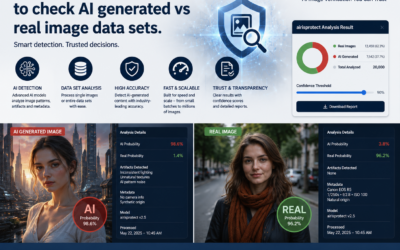


The Dating Industry in 2026 and the Problem with Fake Guys Profile Pics.
How AI Image Moderation Can Help Dating Platforms Fight Fake Male Profiles, Catfishing and Online Fraud
The dating industry has changed dramatically over the last decade. Dating apps and online matchmaking platforms have become an established part of modern social life, allowing millions of people to meet potential partners, make new connections and communicate across geographical boundaries. But with this growth comes a serious challenge: fake dating profiles and fake profile pictures.
One of the most visible problems is the increasing number of fake male profiles using stolen, manipulated or completely AI-generated pictures. A profile may appear to show an attractive man, a successful professional or an ordinary person looking for a relationship. However, the individual behind the account may be someone entirely different.
This phenomenon, commonly associated with catfishing, can create significant problems for dating platforms and their users. Fake profile pictures can be used for romance scams, spam, identity deception, financial fraud, harassment or simply to manipulate other users.
At the same time, the development of generative artificial intelligence has made creating convincing fake profile pictures considerably easier. A person no longer needs access to photographs of a real individual. AI image generators can create realistic-looking faces that may never have existed in the real world.
For the dating industry, this creates a new Trust & Safety challenge: How can platforms distinguish authentic profile pictures from stolen, manipulated or AI-generated images without making the user experience unnecessarily complicated?
The Growing Problem of Fake Male Dating Profiles
Fake dating profiles are not a new phenomenon. Dating websites have dealt with fraudulent accounts for many years. Traditionally, scammers might take a photograph from a social network, professional website or another dating platform and use it to create a false identity. This is where airisprotect.com can greatly support.
Male profile pictures are frequently used in this type of deception. A scammer may use photographs of a businessman, model, soldier, doctor, engineer or other professional to create an apparently credible identity.
The objective can vary considerably.
Some fake profiles are created simply to generate attention or increase the apparent number of users on a platform. Others are designed specifically to deceive people.
Potential objectives include:
- Romance scams or Financial fraud
- Identity manipulation and Spam campaigns
- Phishing with Promotion of external services
- Fake engagement and Social engineering
- Harassment and Reputation attacks or Creation of fraudulent accounts
The problem becomes particularly serious when users establish an emotional relationship with someone who does not actually exist in the form presented by the profile.
What Makes a Fake Profile Picture Difficult to Detect?
A fake profile picture is not necessarily an obviously manipulated photograph.
In the past, fake images often contained visible signs of editing. A distorted face, unrealistic background or poor image quality could make suspicious content relatively easy to identify.
Modern AI-generated images are different.
Generative AI systems can produce realistic portraits with convincing skin textures, lighting, facial structures, clothing and backgrounds. Some images can look completely ordinary at first glance.
This means that traditional visual inspection is becoming less reliable.
A fake profile may contain:
- A realistic-looking male face with Professional-looking clothing
- A convincing background combined with apparently natural lighting
- Multiple photographs in different poses and different locations
- High-resolution images
The combination can create the appearance of a real person even when the person represented by the images does not exist.
AI-Generated Faces Are Changing Catfishing
The emergence of generative AI has introduced an important new dimension to the catfishing problem.
Previously, someone creating a fake profile generally needed to find photographs of an actual person. Today, an attacker can generate a synthetic identity. This has several consequences for dating platforms.
A fake account can potentially have a complete visual identity without using a real person’s photographs. The profile picture can be generated specifically for the fictional character. Airisprotect.com will detect the fake ones.
The same fictional person can then be represented through multiple images:
- A portrait photograph
- A casual selfie
- A vacation photograph
- A business photograph
- A gym photograph
- A social event photograph
This makes the fraudulent profile appear more credible.
The challenge for dating platforms is therefore no longer simply identifying stolen pictures. Platforms increasingly need to consider the broader question of image authenticity.
Stolen Photos Remain a Major Issue
AI-generated images are only one part of the problem. Stolen profile pictures remain an important source of fake dating identities.
A fraudster might download a photograph from a public social media account and use it on a dating platform. The original person may have no knowledge that their photograph is being used. This can cause problems for both sides.
The victim whose photograph has been stolen may experience:
- Unwanted messages and Reputation damage
- Harassment with emotional distress
- Repeated impersonation aor False accusations
Meanwhile, users interacting with the fake profile may believe they are communicating with the person shown in the photograph.
For dating companies, this means that image moderation and identity protection are closely connected. Here airisprotect.com and also airisident.com will be a paar for security and more succesful business.
The Difference Between Fake, Edited and AI-Generated Images
Dating platforms should consider several categories of suspicious profile pictures rather than treating every problem as identical.
- Stolen Images
A photograph may be authentic but belong to another person.
The image itself is real, but the profile’s claim about who is represented is false.
- Manipulated Images
A real photograph may have been edited.
Examples include changing facial characteristics, removing people, altering backgrounds or modifying other visual information.
- AI-Generated Images
The entire image may have been synthetically generated.
The face may not correspond to any real individual.
- Deepfake or Face-Swapped Images
A person’s face may be digitally inserted into another photograph or video.
This can create a particularly convincing false identity.
- Authentic Images Used in a False Context
A photograph may be completely genuine, but the surrounding profile information can still be misleading.
This is important because image analysis alone cannot always determine whether a person is telling the truth.
Why Dating Platforms Need Automated Image Moderation
A major dating platform may process thousands or millions of images. Manually reviewing every profile picture is expensive, slow and difficult to scale.
This is where AI image moderation can provide an additional layer of protection. An automated moderation system can analyze images when users upload them and identify characteristics associated with potentially problematic content.
Depending on the technology and configuration, an image moderation system can potentially analyze:
- Nudity
- Explicit content
- Violence
- Hate-related imagery
- Manipulated images
- Potentially synthetic images
- Duplicate images
- Image quality
- Faces
- Objects
- Text contained in images
- Potentially suspicious visual patterns
For dating platforms, this technology can become part of a broader Trust & Safety architecture. Please check the product details for more options and contact the sales team under [email protected] for support.
The objective should not necessarily be to automatically reject every image that appears unusual. Instead, automated systems can help identify content that deserves additional attention.
AI Detection Should Support Human Moderators
One important principle is that automated detection should not always be treated as an absolute decision-maker. AI image analysis can produce a probability or confidence assessment. A platform can then combine this information with other signals.
For example:
Image analysis + account behavior + device signals + identity verification + user reports = stronger Trust & Safety decision-making
A profile that has an unusual image may not necessarily be fraudulent. But a profile with a suspicious image, newly created account, unusual messaging behavior and multiple reports may deserve significantly more attention.
This layered approach can reduce false positives while still identifying potentially harmful accounts.
Detecting Multiple Pictures of the Same Fake Identity
Another interesting area is consistency analysis. Suppose a dating profile contains five photographs. The platform can potentially analyze whether the photographs appear to represent the same individual.
Relevant signals might include:
- Facial similarity, Facial geometry or Age consistency
- Hair characteristics and Image metadata where available
- Background consistency, also Visual style and repeated image patterns
AI-based computer vision can help determine whether multiple images are visually compatible with one person.
This does not prove identity. However, it can provide an additional signal for fraud detection.
Reverse Image Search and Image Matching
Dating platforms can also use image matching technology to identify photographs that appear elsewhere online. If the same profile photograph appears under multiple names or accounts, that may be an important warning signal.
For example, a single photograph could appear in:
- Multiple dating profiles or Social media accounts
- Classified advertisements and Fraud reports
- Other online services
Image similarity technology can help platforms identify repeated use of the same photograph.
Again, this should be treated as a signal rather than automatic proof of fraud. People can legitimately use the same photograph across different services.
The context matters.
Fake Profile Pictures and Romance Scams
The consequences of fake profile pictures can become particularly serious when they are connected to romance scams. A scammer may create a convincing dating profile and gradually establish trust with another user.
The interaction may initially look completely normal. Over time, however, the scammer might introduce requests involving:
- Money, Cryptocurrency, Gift cards,Investments
- Emergency payments, Travel expenses
- Personal financial information
The profile picture can play an important psychological role because people naturally use visual information when evaluating online identities.
A convincing photograph can therefore contribute to the perception that a profile is legitimate. Dating platforms cannot eliminate all scams through image analysis, but detecting suspicious images can become one component of a broader fraud-prevention strategy.
The Role of Identity Verification
Image moderation and identity verification should not be viewed as competing technologies. They address different questions.
Image moderation asks:
“Is this image potentially problematic or suspicious?”
Identity verification asks:
“Can the person behind this account demonstrate that they are the person they claim to be?”
A dating platform can therefore combine both approaches.
For example, a platform could use automated image analysis during registration and offer or require additional identity verification when certain risk indicators appear. This creates the possibility of a risk-based verification process.
Not every user necessarily needs the same level of verification. Instead, additional verification could be triggered by specific risk signals.
Protecting User Privacy
The fight against fake profiles must also respect user privacy.
Dating platforms handle highly sensitive personal information. Photographs, identity documents, relationship preferences and communications can all represent personal data. Therefore, companies implementing AI moderation should consider:
- Data minimization, Access controls
- Transparent policies and User rights
- Appropriate legal bases
- Clear explanations of automated processing
Trust & Safety should not become an excuse for collecting unnecessary information.
A successful dating platform needs to protect users from fraudulent activity while maintaining confidence in how their data is handled.
False Positives Are a Real Challenge
AI detection is not perfect. A legitimate photograph can sometimes appear suspicious to an automated system. For example, unusual lighting, heavy compression, artistic photography or strong image filters could produce unexpected results.
Similarly, an AI-generated-image detector can make mistakes. This is why dating platforms should avoid relying on a single technical indicator. A mature moderation strategy should combine multiple signals and provide mechanisms for appeal and human review where appropriate.
The goal is not simply to maximize the number of blocked images. The goal is to improve overall platform safety and user trust.
Building a Multi-Layer Dating Safety Strategy
A modern dating platform can consider several layers of protection.
Layer 1: Registration
Basic checks can identify suspicious registration patterns.
Layer 2: Profile Picture Analysis
AI image moderation can analyze uploaded photographs.
Layer 3: Duplicate and Similarity Detection
Image matching can identify photographs appearing across multiple accounts.
Layer 4: Identity Verification
Users may be asked to demonstrate their identity when risk indicators justify additional verification.
Layer 5: Behavioral Analysis
The platform can examine suspicious messaging or account activity patterns.
Layer 6: User Reporting
Users remain an important source of information because they can report suspicious behavior.
Layer 7: Human Moderation
Trained moderators can review complex cases where automated systems cannot provide sufficient certainty.
This layered architecture is more robust than relying on one technology.
Why the Dating Industry Needs to Take Fake Images Seriously
Dating platforms compete heavily on trust. Users need to believe that the people they see are reasonably genuine and that the platform takes abuse seriously. A high number of fake accounts can undermine that confidence.
Users may begin to ask:
“Is this person real?”
“Is the photograph authentic?”
“Is this profile really operated by the person shown?”
“Could this be an AI-generated face?”
“Why are so many profiles contacting me?”
These questions can negatively affect the overall user experience.
Consequently, preventing fake profiles is not only a compliance or security issue. It can also become a customer experience and platform-quality issue.
The Future of Fake Profile Detection
The technology behind synthetic media will continue to evolve.
AI-generated images are likely to become increasingly realistic. At the same time, detection technologies will continue to develop. This creates a technological arms race between content generation and content verification. Dating companies should therefore avoid treating fake-image detection as a one-time implementation.
Instead, they should establish an ongoing AI Trust & Safety strategy.
This can include:
- Regular model updates and continuous testing
- Human review
- New detection signals and User feedback
- Fraud intelligence and Identity verification like airisident.com
- Image similarity analysis and Risk-based workflows
The objective is to make the platform more difficult to abuse while keeping legitimate users moving through the registration and matching process efficiently.
AI Image Moderation as a Practical Tool for Dating Platforms
For companies operating dating apps, social discovery platforms or matchmaking services, AI image moderation can provide an important technical layer.
Solutions such as airisprotect.com, for example, can be positioned within a broader Trust & Safety strategy for analyzing visual content and helping platforms identify potentially problematic images. The technology should not be presented as a magic solution that can determine whether every person online is genuine.
Instead, it can support a structured moderation workflow. An automated image check can happen at upload. Suspicious content can then be assigned a risk level, routed for additional verification or reviewed by a moderator.
This approach allows platforms to process large volumes of content without requiring human moderators to manually inspect every single photograph.
Trust Is Becoming a Technology Feature
The dating industry has always depended on trust. Users want to know that the people they meet are genuine, that their personal information is protected and that the platform takes abuse seriously.
Fake male profile pictures are one part of a much larger challenge involving catfishing, synthetic identities, stolen photographs and online fraud. AI is contributing to the problem by making realistic synthetic images easier to create. At the same time, AI can also contribute to the solution through automated image moderation, image analysis, similarity detection and risk assessment.
The most effective approach is unlikely to be a single detector or a single verification method.
Instead, dating platforms can combine AI image moderation, identity verification, behavioral analysis, image matching, user reporting and human moderation into a comprehensive Trust & Safety framework.
Conclusion: Fighting Fake Guys Profile Pics with Smarter Technology
The problem of fake male profile pictures is becoming increasingly complex for the dating industry.
Traditional stolen photographs remain relevant, while AI-generated faces and synthetic identities introduce new challenges. A profile can now look authentic without being connected to a real person in the way users expect.
For dating platforms, the answer is not simply to ask users to “be careful.” Technology can help platforms take greater responsibility for the safety and authenticity of their environments.
AI-powered image moderation can help analyze profile pictures at scale. Image matching can identify repeated photographs. Identity verification can provide additional confidence when appropriate. Behavioral signals and human moderation can add further context.
The key is to build these technologies into a layered Trust & Safety strategy.
As artificial intelligence makes fake images easier to create, the ability to analyze, verify and contextualize digital images will become increasingly important. For the dating industry, trust is not just a marketing message. It is becoming a technical requirement.
Platforms that invest in intelligent content moderation and identity-focused safety processes can create an environment in which users have more confidence in the profiles they encounter — while still maintaining an efficient and enjoyable dating experience.